Walk two blocks north from a Sedgefield cottage and you cross into Dilworth without a sign, a gate, or an obvious change in the streetscape. Both read as established, tree-lined Charlotte neighborhoods within easy reach of Uptown. A buyer touring both in the same afternoon could reasonably assume they're shopping the same rules.
They aren't. One of those streets sits inside a Local Historic District. The other doesn't. That single administrative fact, more than square footage or school zone or proximity to the Rail Trail, is what decides whether a 1940s bungalow becomes a scarce, appreciating asset or a placeholder for the next custom build.
The Boundary No One Points Out on a Tour
Dilworth is one of six Charlotte neighborhoods carrying Local Historic District designation, a status tied to its founding as one of Charlotte's first streetcar suburbs in the 1890s. Sedgefield, carved out of the Marsh family's dairy farm and built out in the 1940s and 1950s, sits immediately south and was never brought into that framework. The two neighborhoods are close in geography and distant in regulatory reality.
Inside a historic district, exterior changes require a Certificate of Appropriateness from the Historic District Commission before a permit gets issued. That review typically runs four to eight weeks and covers:
- New windows, doors, or siding that alter the visible facade
- Additions, dormers, or second-story pop-ups
- Front porch, railing, or roofline changes visible from the street
- Demolition of any structure inside the district boundary
Sedgefield has none of this. An owner replacing siding, popping a second story, or clearing a lot for new construction answers to the same building, electrical, and plumbing code every Charlotte homeowner does, but not to a commission weighing whether the change preserves neighborhood character. That difference sounds procedural. In practice it is the entire reason the two neighborhoods are aging in opposite directions.
What $460,000 Buys You Two Ways
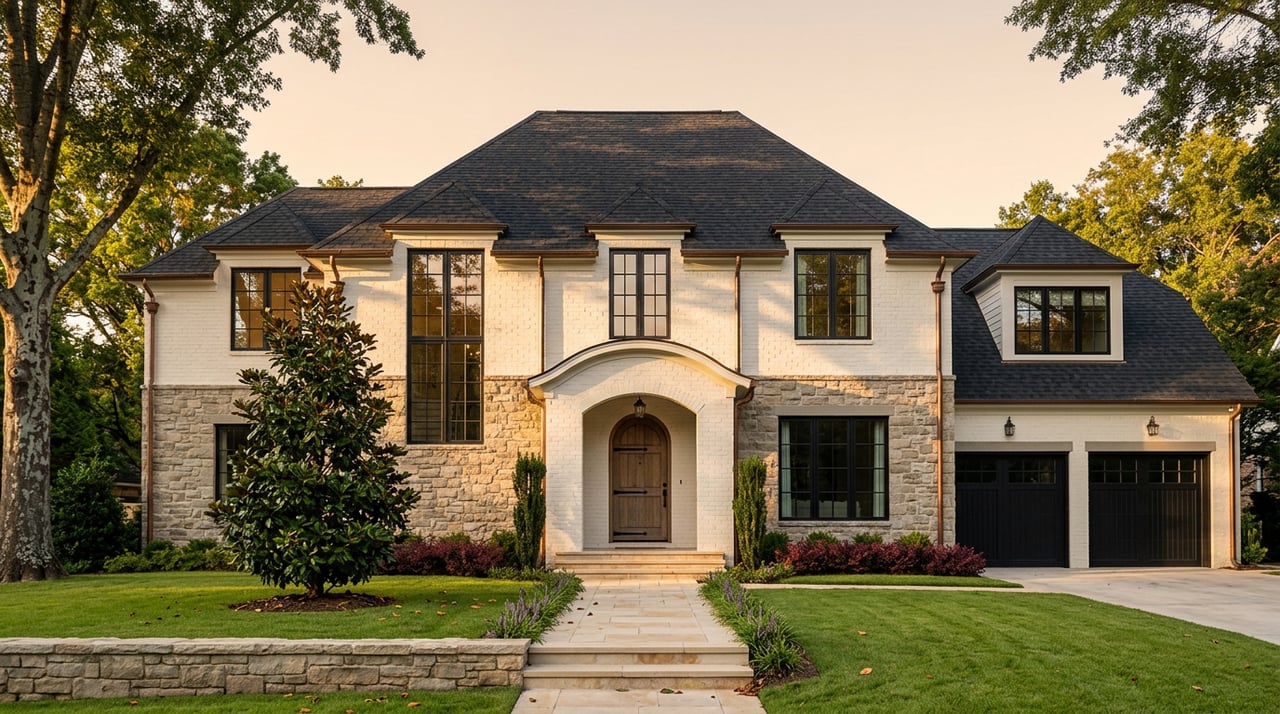
The math shows up fastest in what happens to the smallest original homes. Sedgefield's post-war cottages were built modest, many in the 632 to 1,400 square foot range. Without a historic review standing between a buyer and a bulldozer, those cottages increasingly get purchased for their land, not their square footage. Recent listings have shown $2 million-plus new construction rising on lots that traded as roughly $460,000 teardowns, with the finished home often exceeding 4,000 square feet.
That volume of rebuilding has drawn a genuinely deep bench of custom and semi-custom builders into the neighborhood, including Keen Building Company, Pike Properties, Vista Homes, Linnane Homes, True Homes, Barringer Homes, Alenky Signature Homes, Cyras Custom Homes, and David Weekley Homes, among others. It is one of the more active builder rosters for any close-in Charlotte neighborhood, and it exists because the path from purchase to permit to finished custom home is shorter here than almost anywhere comparable near Uptown.
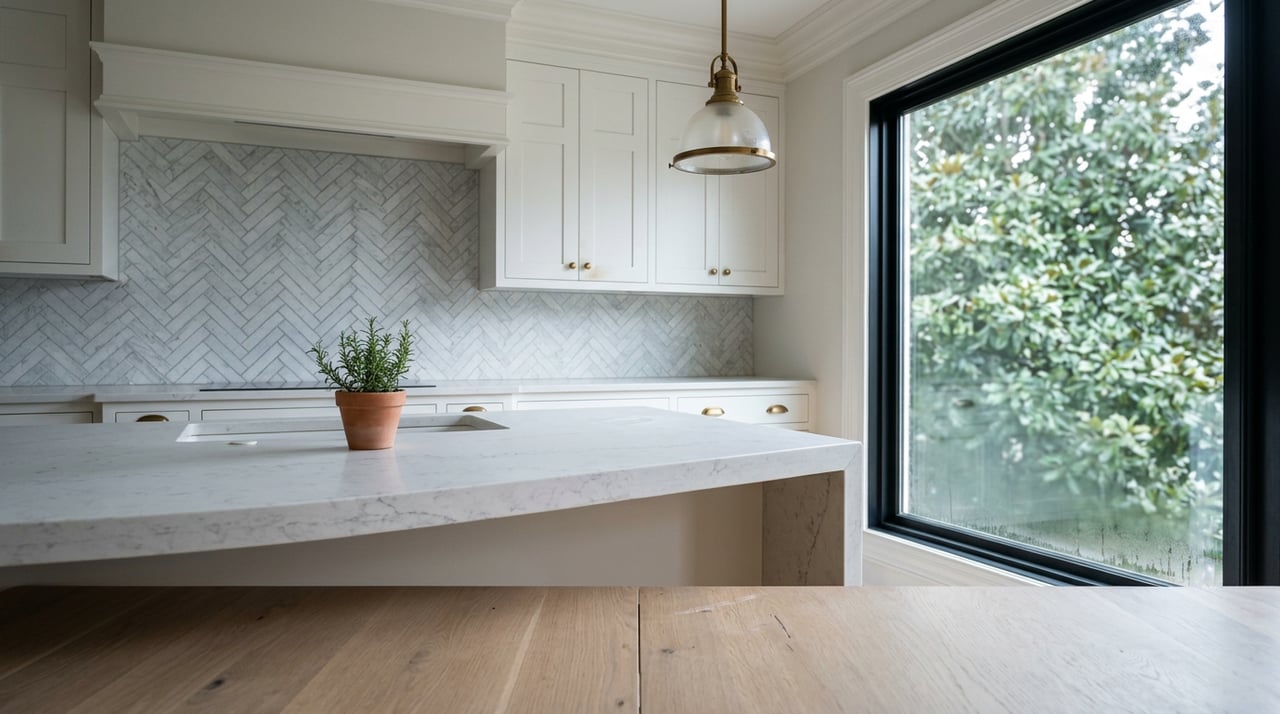
Renovation costs tell the same story from the other direction. A kitchen remodel in an existing Sedgefield home has run roughly $90,000 to $160,000, with a bathroom renovation in the $45,000 to $90,000 range, based on recent Charlotte-area renovation cost data. The equivalent Dilworth projects run meaningfully higher, not because the finishes are nicer, but because historic district review adds time, engineering, and design constraints that a Sedgefield renovation never touches.
| Project | Sedgefield (no historic review) | Dilworth (Local Historic District) |
|---|---|---|
| Kitchen remodel | $90,000–$160,000 | $125,000–$200,000+ |
| Bathroom renovation | $45,000–$90,000 | $60,000–$110,000 |
The gap isn't craftsmanship. It's the cost of clearing a commission that Sedgefield doesn't have.
The Family Building Both Booms
There's a second layer to this that most comparisons of the two neighborhoods miss entirely, and it belongs to one family.
Sedgefield exists because Marsh Properties, founded in the 1920s, converted its own farmland south of Dilworth into a residential neighborhood in stages through the 1940s and 1950s, eventually reaching roughly 300 Craftsman-style cottages and duplexes across about 40 acres. That same company still owns and manages a meaningful footprint of the neighborhood today, and it is currently running one of Charlotte's longer-running master redevelopment projects on its own remaining land along South Boulevard.
The phases have real names and real dates attached. A 68,000 square foot retail phase anchored by Harris Teeter finished in 2017. The Edge, a 263-unit residential phase, completed in 2021. A 118,000 square foot Class A office building called 2825 South followed in 2023. The Brinkley, 166 more residential units, began preleasing in mid-2024. The final piece, called The Remsley, broke ground in late 2025 and will deliver 171 garden-style apartments and 43 townhomes anchored by a 16,000 square foot clubhouse, with first move-ins targeted for late 2026.
That decade-plus timeline is only possible because the same absence of historic review that lets an outside builder replace a $460,000 cottage with a $2 million custom home also lets the neighborhood's founding family redevelop its own land on its own schedule. Sedgefield isn't being reshaped by one force. It's being reshaped by two, institutional master planning on one end and individual custom-builder infill on the other, and both run through the same open door.
What This Means If You're Comparing the Two Right Now
If you're weighing Sedgefield against Dilworth on price alone, the headline numbers will mislead you, because they're not measuring the same kind of market.
As of early August 2026, Redfin listed just four new homes for sale in Sedgefield at a median listing price of $817,000, with homes spending a median of 53 days on market and seven sales closing in the prior month. Separately, sale data through May 2026 put the median sale price at $984,950 and the average at $1,119,578, with an average 58 days on market. A snapshot from March 2026 showed a $1.27 million median list price with days on market down to 39, a 13 percent drop from the year before.
None of those numbers are wrong. They're measuring different slices of the same neighborhood at different moments, new construction pricing separately from overall resale, luxury infill pulling averages up while smaller original cottages still occasionally trade below the headline median. That spread is the tell. A neighborhood with a stable, protected housing stock produces a tighter, more predictable median. Sedgefield's median is wide because it's really two markets sharing one name, an original-cottage market and a new-construction market, with land value doing most of the work in between.
For a buyer, that means the appraisal comp a lender pulls for an original cottage may lean heavily on nearby teardown sales rather than true like-for-like renovation comps, since so much of the recent transaction volume is land value plus new build rather than an updated original home. For a seller holding an unrenovated cottage, it means the highest and best use of the property may genuinely be its lot rather than its structure, which changes how you should think about any renovation spend before listing. For anyone weighing a full gut renovation instead of a sale, the math above is the real starting point, not a national average.
A Few Direct Questions
Will Sedgefield ever become a historic district? Nothing in current planning points that direction. The neighborhood's active teardown and infill market, plus the ongoing Marsh Properties redevelopment on adjacent land, would need to reverse course meaningfully before that conversation became realistic.
Does no historic designation mean an owner can build anything? No. Standard Charlotte building, electrical, plumbing, and zoning code still applies to every project. What's absent is the additional Historic District Commission layer that reviews exterior appearance and preservation intent before a permit issues.
What should I actually budget if I want to renovate an original Sedgefield cottage rather than sell the lot? Based on recent local renovation figures, plan for $90,000 to $160,000 on a kitchen and $45,000 to $90,000 on a bathroom, and weigh that spend against what a comparable lot has recently sold for as a teardown, since that comparison is often the deciding factor in whether renovation or replacement makes financial sense on a given street.
If you're trying to figure out which side of that comparison your own property, or a property you're considering, actually falls on, that's a conversation worth having before you commit to either path. Helen Honeycutt Group works this exact corridor, from Sedgefield through Dilworth and into South End, and can walk you through what your specific lot, cottage, or renovation candidate is really worth in today's market. Get a Free Home Valuation to start that conversation with real numbers instead of a headline median.